

Jesters to Jenner: Berkeley Church
While on an errand in Berkeley on a sunny morning during Holy Week, I thought it would be nice to visit the lovely parish church, St Mary the Virgin – our “local” – which has witnessed many of life’s milestones over the forty years I’ve lived here, not least my wedding in 1987 and the baptisms of my three children in the late 1990s. Having the place to myself, I wandered quietly with my thoughts while soaking up the sense of history and timelessness both within the church and outside in the sunshine in the graveyard.
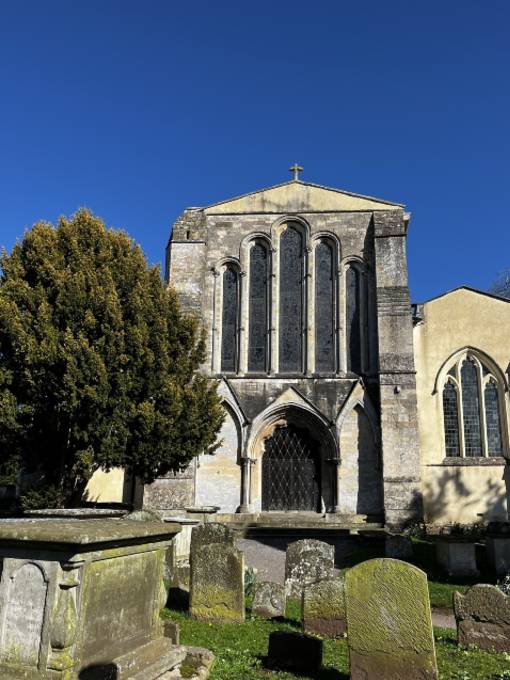
I concluded that St Mary’s is a treasure trove of history! While closely linked to Berkeley Castle and the Berkeley family – one of England’s oldest noble lineages – it stands as a “must-see” destination in its own right. Largely built in the 12th and 13th centuries, it combines medieval craftsmanship, wall paintings and Victorian restoration, particularly in its stained glass.
Personal connections aside, here are five reasons for visitors to stop by Berkeley Church:
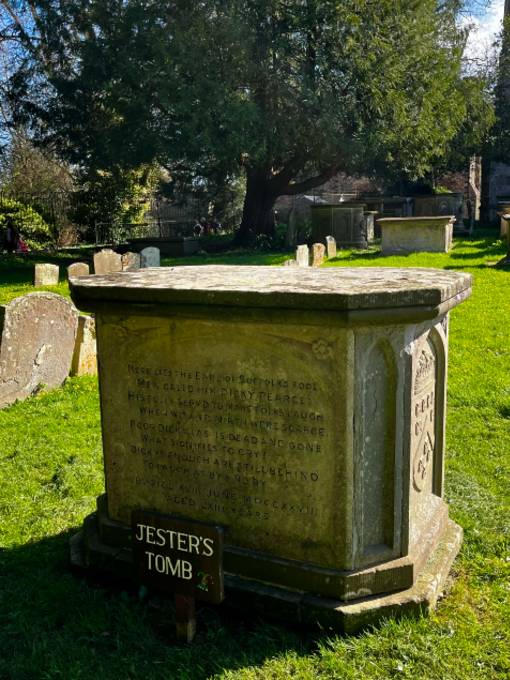
1. Dicky Pearce’s tomb (SE of the Bell Tower) described as “the last jester in England”. In reality, the tradition of court jesters died out during the early 17th century and Dicky, who died in 1725 (the inscription on his tomb of 1728 is incorrect!) was more likely a local “fool” attached to Berkeley Castle. However, his story – part history and part legend – captures the imagination and represents the tail end of that older tradition.
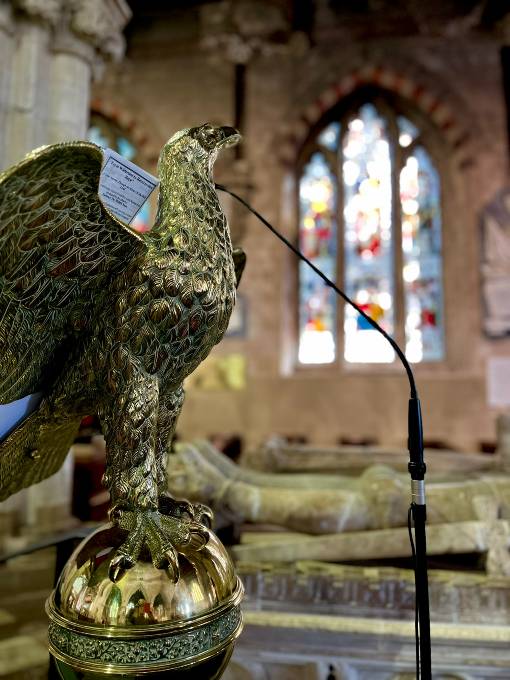
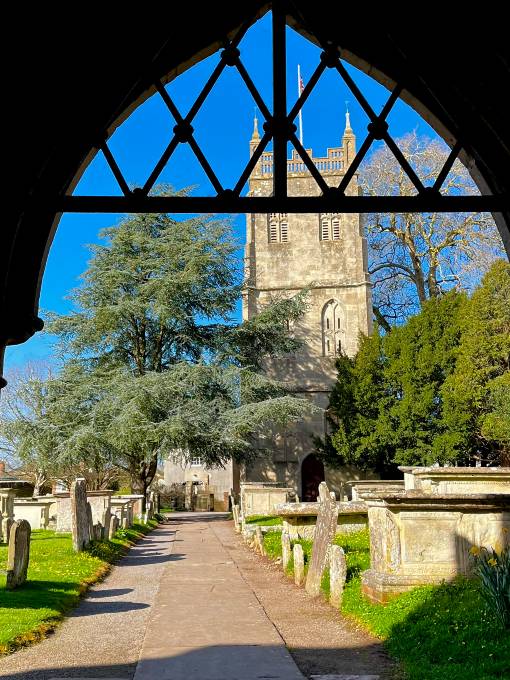
2. Detached bell tower – unusual for the region, where towers are typically integrated into the church. It was originally built as a practical medieval solution to support heavy bells on potentially unstable ground. Damaged during the Civil War, the tower was rebuilt in 1750, with some bells dating from 1700. There is nothing more evocative than the sound of the bells carrying across Castle Meadows and beyond – on occasion even drifting as far as Pond Cottage.
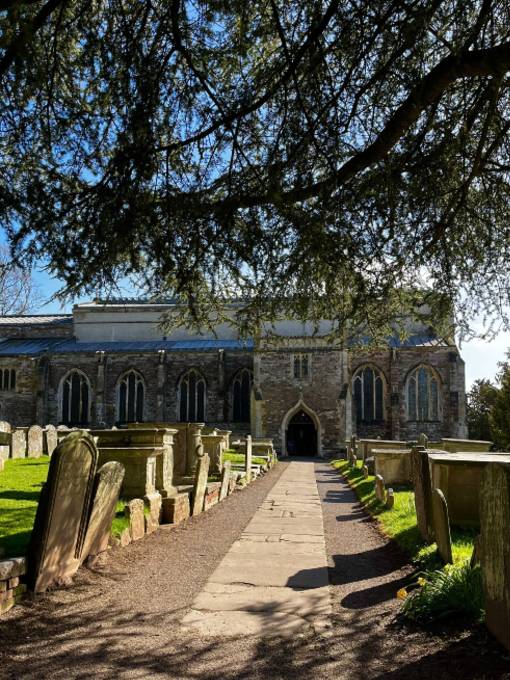
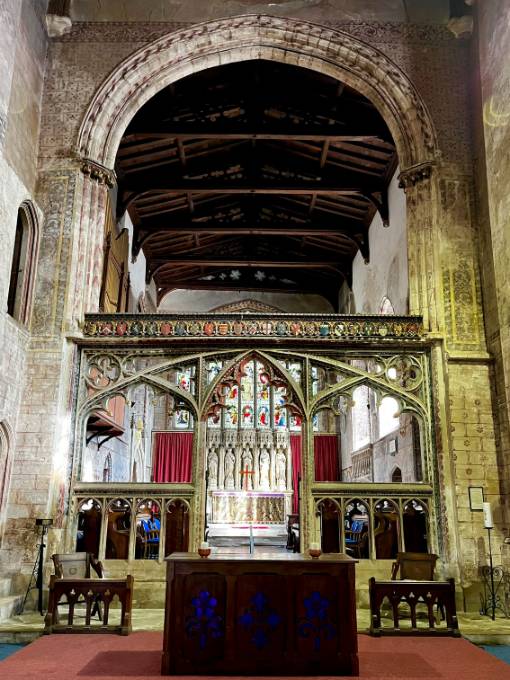
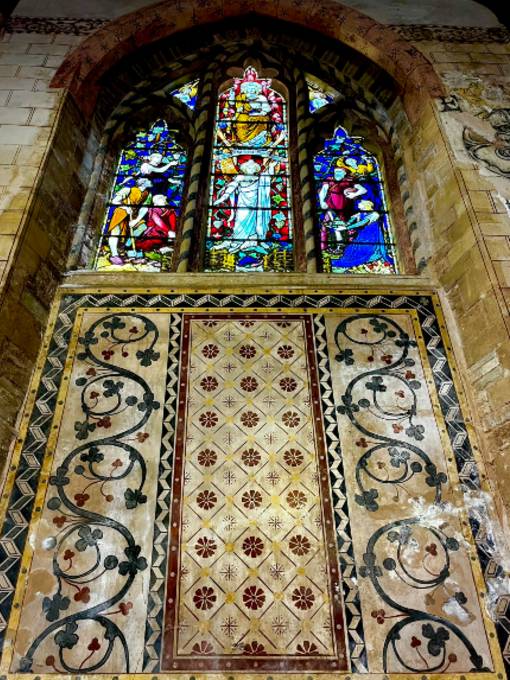
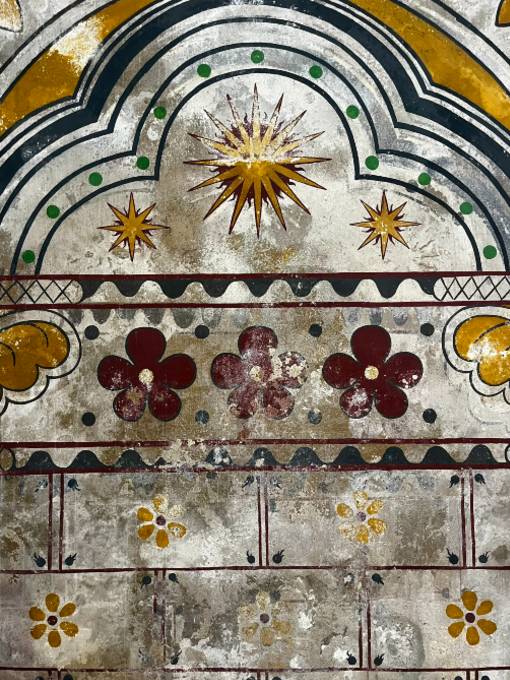
3. Medieval wall paintings – delicate floral and decorative motifs uncovered during 19th-century Victorian reformation. While such colourful interiors were common in Medieval churches, many were stripped out or whitewashed during King Henry VIII’s Reformation, making Berkeley’s survival over seven centuries so incredible!
4. Victorian stained glass – especially the richly coloured east window behind the high altar which is a memorial to Berkeley’s most famous son, Dr. Edward Jenner (1740-1823) who discovered the smallpox vaccine in 1796. The scenes in the main panels represent some of Christ’s miracles of healing while the smaller ones contain devices representing medicine and healing. When sunlight streams through the glass, it transforms the chancel into a vibrant focal point. Completing the sensory experience is the Victorian organ – though not large, its craftsmanship complements the church’s architectural features.
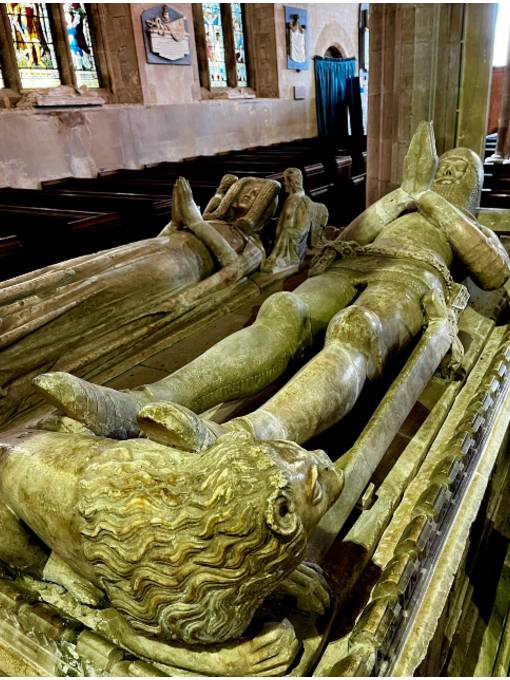
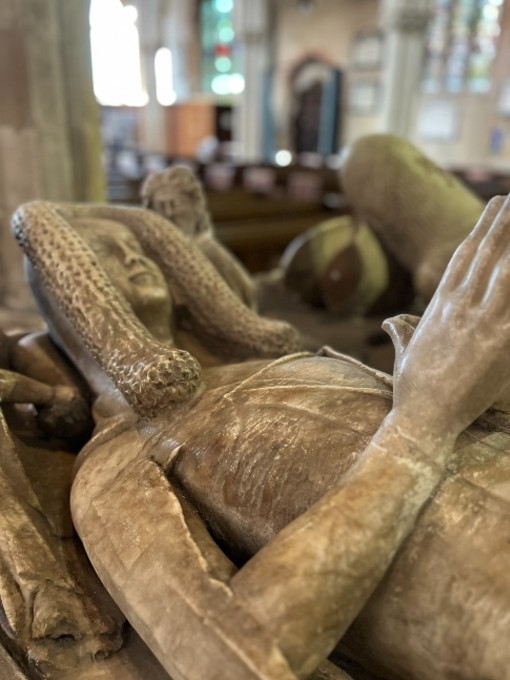
5. Effigies and tombs – a simple stone marks the Jenner family vault to the left of the chancel, the final resting place of Edward Jenner. Also, the tomb and effigy of Thomas, 8th Lord Berkeley (1326–1361), who was Lord of Berkeley when Edward II was murdered at the Castle in 1327. Alongside him is the tomb of his second wife, Lady Katherine Berkeley (1310- 1385), who founded Katherine Lady Berkeley School in Wotton-Under-Edge (colloquially known as KLB), one of the oldest schools in England. Shifting perspective from life’s end to its beginnings, do take a look at the rare large square mid-12th century font, one of the oldest features in the church.
For visitors exploring the South Cotswolds, St Mary’s Church is a hidden gem that offers a fascinating glimpse into centuries of English history. It’s close links to Berkeley Castle and notable figures such as Edward Jenner adds further interest, and is the perfect, uncrowded spot to while away an hour or so. For refreshments after your visit, I would recommend The Perfect Blend or Berkeley Tea Rooms in Berkeley’s characterful High Street, lined with many 17th century buildings. The history never ends!
2nd April 2026